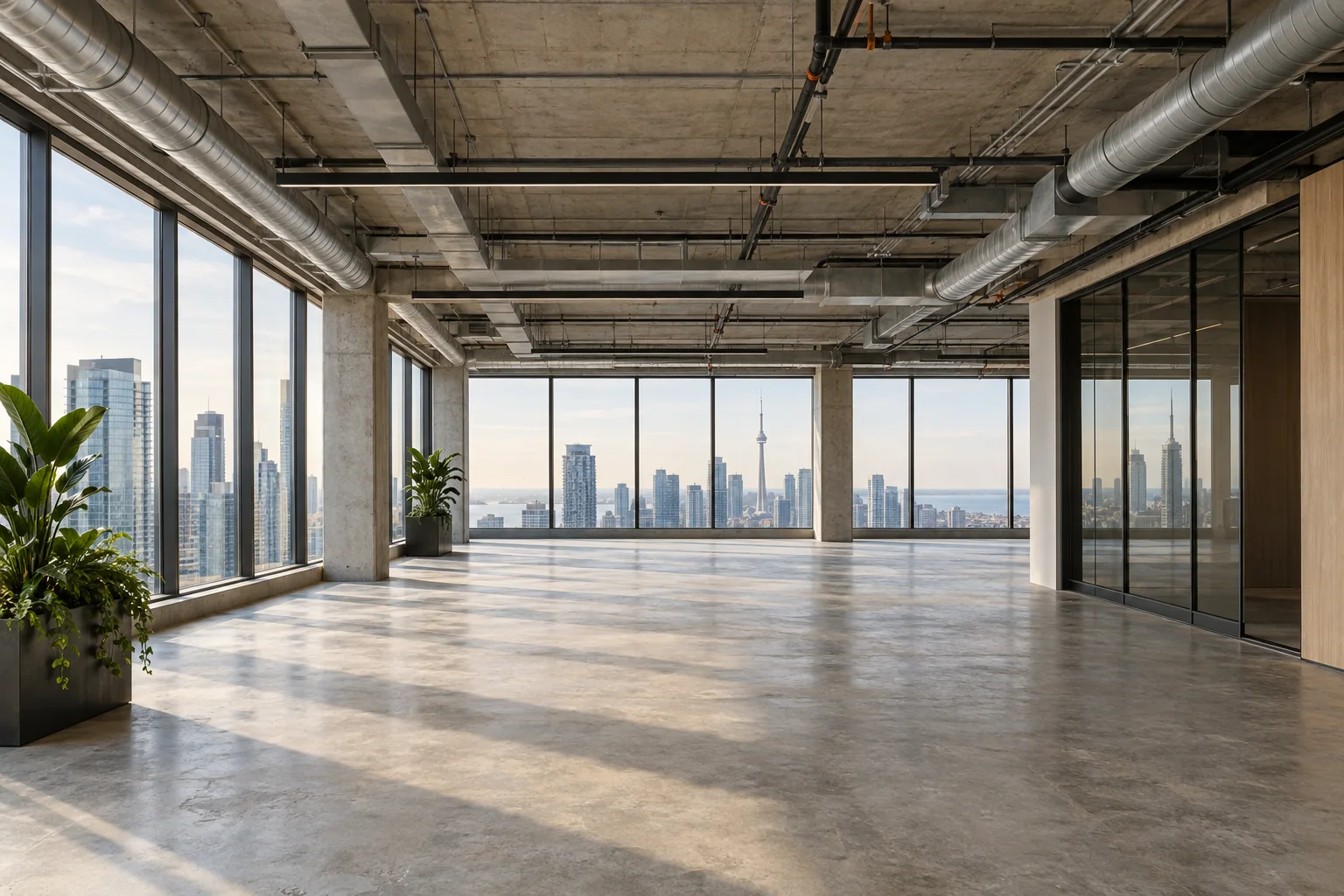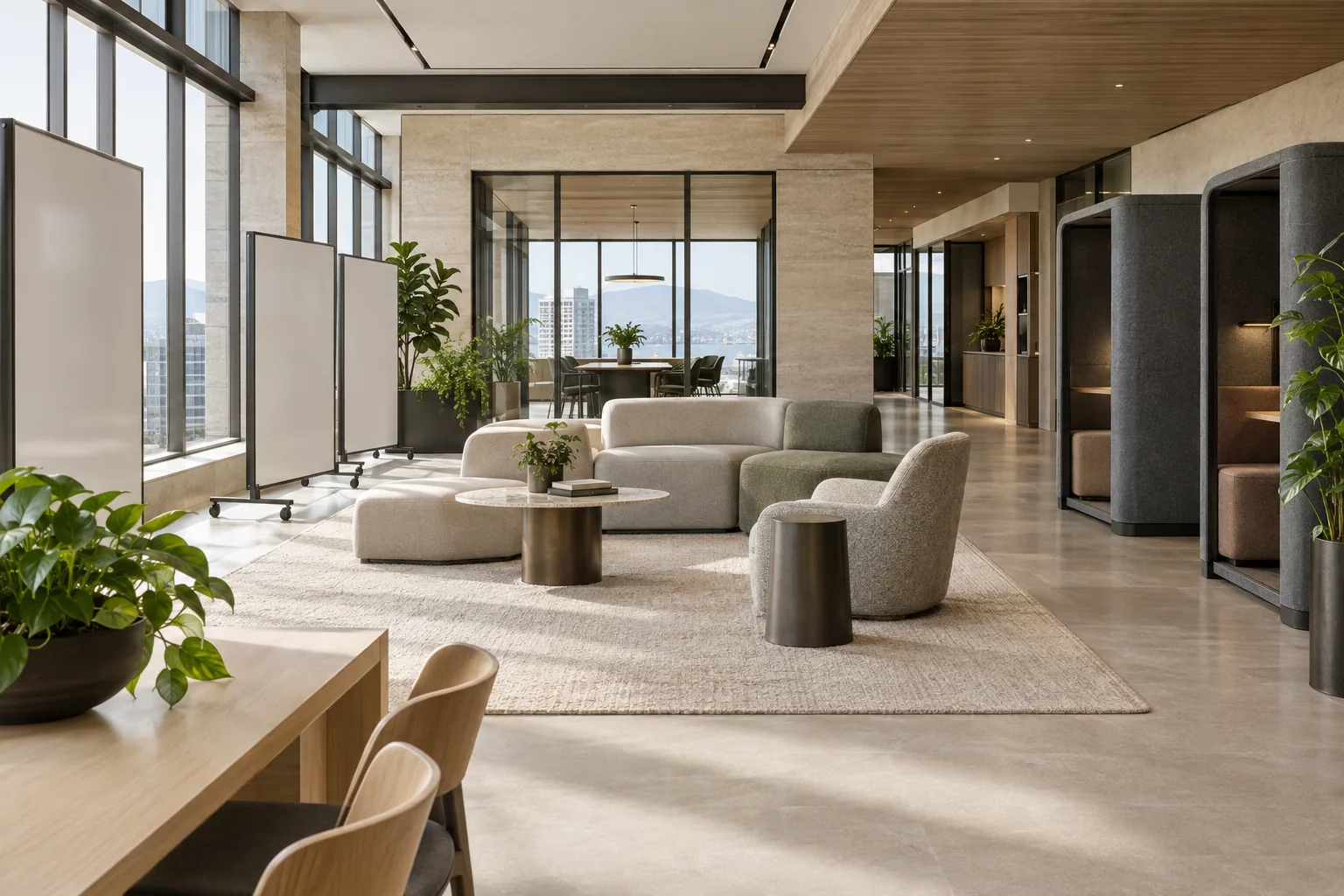
Moving out of your office so it can be renovated is expensive and disruptive. Temporary space has to be found and fitted, IT has to move twice and teams lose time and momentum. For many renovations, there is a better option: keep working, and let the construction happen around you.
Renovating an occupied office is entirely achievable, but it needs more planning than a vacant fit-up. These are the principles we follow, refined in TCC Canada's own centres, where members expect a working space every day.
Start with a phasing plan
A phasing plan divides the work into zones and puts them in order. Each phase takes a defined area out of service for a defined time, and the rest of the office keeps running. Good phasing considers:
- Which teams or functions can move temporarily, and where to.
- Which areas are critical and must never be out of service, such as reception, server rooms or client meeting rooms.
- How building systems are zoned, so that a shutdown in one area does not affect another.
- Safe routes for staff that avoid work areas and exits that stay clear at all times.
Smaller phases mean less disruption for any one group, but they can extend the total duration and add cost. The right balance depends on your business, and it is a decision worth making deliberately rather than by default.
Move disruptive work after hours
Not all construction is equally disruptive. Demolition, coring, drilling into concrete, sanding and anything that creates strong odours are best done when the office is empty, in the evenings or over weekends. Quieter tasks such as painting in sealed areas or furniture installation can sometimes continue during the day.
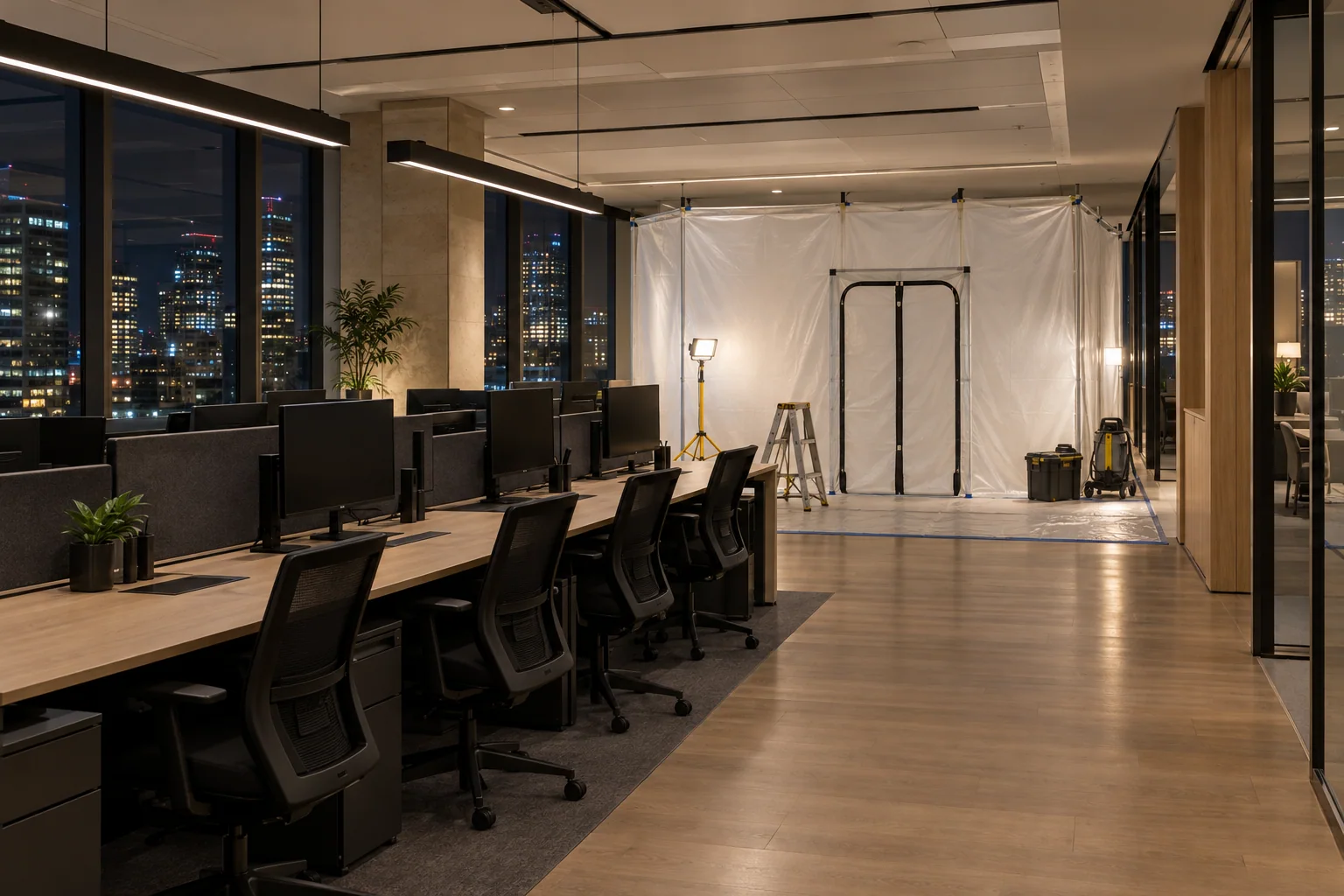
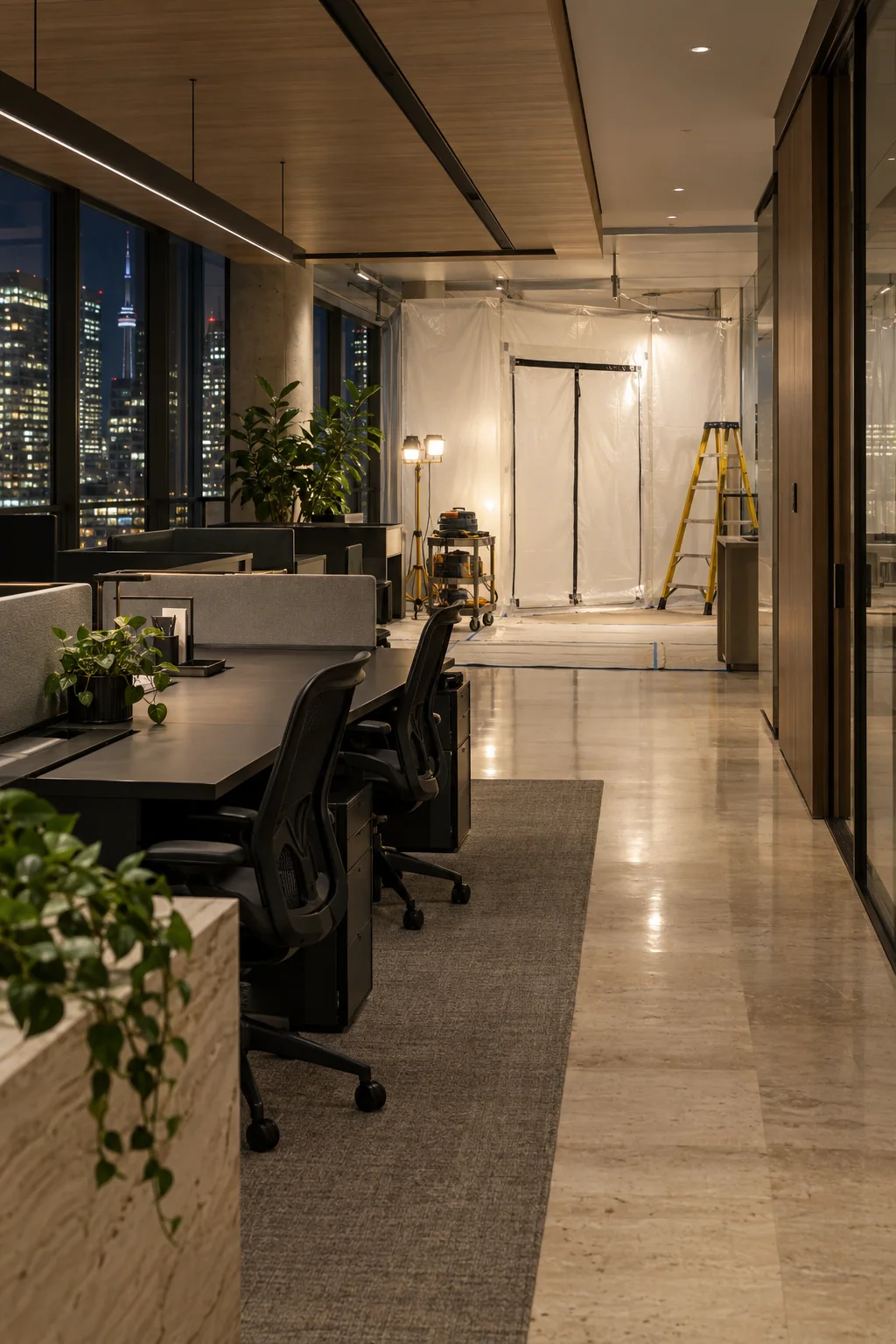
At Suite 2000, 885 West Georgia in Vancouver, we renovated an active office after hours and over weekends in small phases, so occupants could keep using the space throughout. The key was treating each phase as a complete cycle: set up, work, clean, inspect and hand back before the next business day.
The test of an after-hours renovation is simple: on Monday morning, nobody should have to step around the work.
Control dust, noise and air quality
- Sealed temporary partitions with zip doors around active work areas.
- Floor protection, sticky mats and covered furniture in adjacent areas.
- Air filtration or negative air in the work zone where dust is expected, and care to avoid spreading it through the building's return air.
- Low-odour products where possible, and scheduling of high-odour work well before occupants return.
- A documented cleaning standard at the end of every shift.
Coordinate early with the landlord
In multi-tenant buildings, after-hours work has to fit the landlord's rules. Expect to arrange elevator and loading dock bookings, security access for crews, fire alarm and sprinkler impairments, notices to neighbouring tenants and sometimes a building representative on site. Landlords such as Cadillac Fairview have formal processes and work permits for this. Starting those conversations early avoids delays when the work is ready to go.
Keep people safe and the office secure
Working in an occupied office means working around confidential information and valuable equipment. Crews should be supervised, access should be controlled and logged, and confidential areas should be secured or cleared before work begins. Exits, fire equipment and alarm devices must stay accessible and operational, or be covered by an approved impairment plan.
Communicate more than you think you need to
Most frustration on occupied renovations comes from surprises. A short note to staff before each phase, explaining what is changing, where to go instead and who to contact, makes a big difference. So does a single point of contact on the contractor's side that your office manager can reach about anything.
What does it cost compared with moving out?
Occupied renovations can carry premiums for evening and weekend labour, additional protection and cleaning, and a longer overall duration. Those costs need to be weighed against the alternative: temporary space, moving costs, IT relocation and lost productivity. For many projects, staying put is the better value, but it should be priced openly so you can decide.